Commercial Floor Cleaning Robots: A Buyer’s Guide for Facility Managers
A large floor can look clean at opening time and need attention again before the next shift. In offices, hospitals, malls, warehouses and hotels, maintaining consistent floor hygiene requires repeated work across defined areas, often within limited cleaning windows. The challenge for facility managers is not simply getting floors cleaned. It is organising that work without disrupting the people and activities around it.
A commercial cleaning robot can automate repeatable floor-care tasks, allowing cleaning teams to focus on detail work, spill management and areas that require human judgement. However, not every facility needs the same machine. Floor type, cleaning method, traffic, operating hours and maintenance requirements all affect the buying decision.
This guide explains how to evaluate the technology, compare practical capabilities and decide whether autonomous cleaning fits your facility.
What Does a Commercial Floor Cleaning Robot Do?
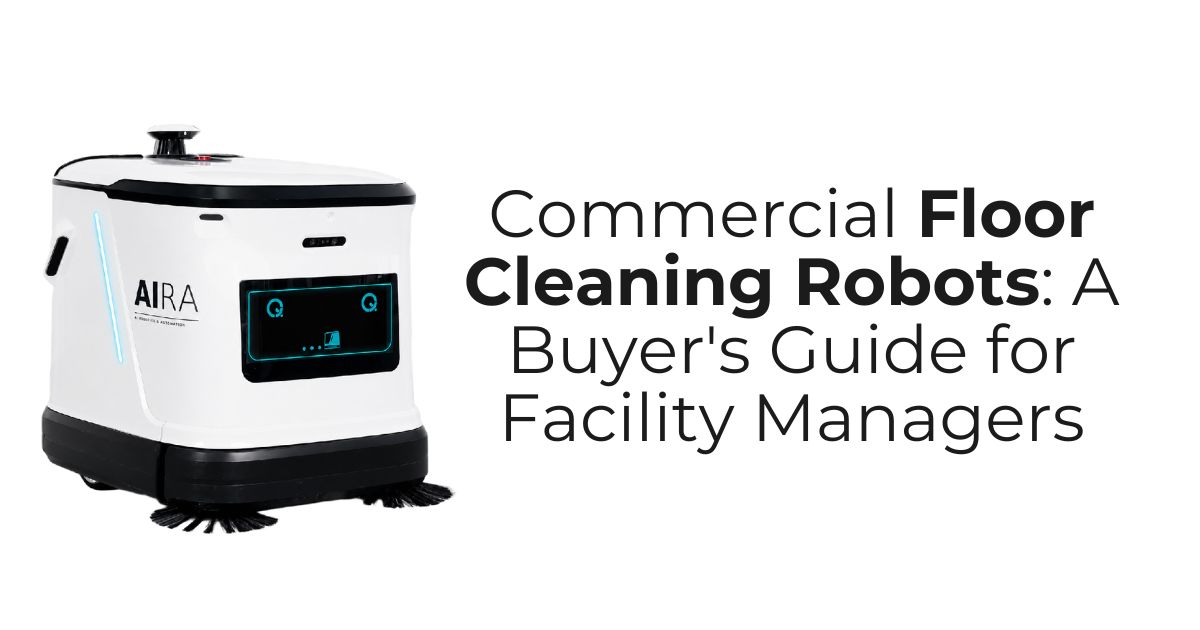
A commercial cleaning robot is an autonomous machine designed to perform defined floor-cleaning tasks in business environments. Depending on its design, it may sweep debris, vacuum dust, scrub hard floors or mop designated areas. Navigation systems allow it to move through mapped spaces without continuous manual steering.
The operating process generally involves mapping the facility, assigning cleaning zones, setting routes and scheduling tasks. Sensors help the machine navigate around obstacles, while software manages its movement and cleaning sequence. Depending on the model, operators may also monitor status and task information through a connected interface.
These systems are best suited to repeatable cleaning work across compatible floors. They do not eliminate the need for manual cleaning, especially around edges, furniture, spills, stairs and surfaces requiring specialised treatment.
The objective is to assign routine floor coverage to automation while retaining people for tasks that need flexibility and judgement.
Choose the Cleaning Method Before the Machine
The first buying decision should concern the cleaning requirement, not the brand or model.
An autonomous floor scrubber is designed for automated scrubbing of compatible hard floors. A sweeping system focuses on collecting loose debris, while a vacuuming system targets dust and other particles suited to its design. Some machines combine sweeping and mopping in one operation.
Before shortlisting equipment, identify the main requirement:
- Sweeping: Loose dust and debris across regular floor areas.
- Scrubbing: Routine washing of compatible hard floors.
- Vacuuming: Dust removal from suitable surfaces.
- Mopping: Maintenance cleaning where the surface and process permit it.
- Combined cleaning: More than one floor-care function in a single operating cycle.
A facility may need different approaches in different zones. A warehouse aisle, a hotel lobby and a hospital corridor do not necessarily have the same cleaning requirements.
Ask suppliers to demonstrate the intended cleaning method on your actual floor surface. A machine’s listed functions matter only when they match the work your team needs to complete.
Match the Robot to Your Facility
A robot designed for an open commercial floor may not suit a crowded office with narrow passages, frequent furniture movement and limited cleaning windows.
A robotic floor cleaner for offices should be assessed against corridor widths, desk arrangements, meeting-room access, floor finishes and the times when people occupy the space. The same principle applies to hotels, hospitals, malls and other large facilities.
Consider these factors before selecting a model:
Floor area and layout: Measure the area the robot must clean, rather than relying only on the building’s total floor area. Exclude spaces the machine cannot access or is not intended to clean.
Floor surface: Check compatibility with the facility’s flooring, including surface transitions, thresholds and uneven sections.
Traffic conditions: A route through a quiet corridor presents different challenges from one passing through a busy lobby.
Operating window: Determine whether cleaning will take place during working hours, after closing or between shifts.
Access and storage: Confirm doorway widths, lift access where relevant, charging space and routes between cleaning zones.
For an industrial cleaning robot India deployment, facility managers should also examine dust conditions, floor debris, aisle layouts and the demands of the particular industrial process. The operating environment should determine the shortlist.
Understand Navigation and Obstacle Handling
Autonomous navigation allows a machine to follow mapped routes and operate without an employee continuously steering it. Technologies such as LiDAR-based mapping help the robot interpret its surroundings and plan movement through designated areas.
However, navigation capability should be evaluated in context. A commercial cleaning robot must work around the obstacles, people and layout changes found in the intended facility.
During a demonstration, observe how the machine responds to people crossing its path, temporary obstructions, furniture and changes in route access. Ask what happens when a passage is blocked or the robot cannot complete its assigned task.
Also establish whether maps and cleaning zones can be updated when the facility changes. A machine that works well only under ideal demonstration conditions may require more intervention in everyday operation.
Do not assess navigation from a specification sheet alone. Test the route the robot will actually be expected to clean.
Compare Coverage, Battery Life and Charging
A cleaning-rate figure indicates how much area a machine is designed to cover per hour under specified conditions. It does not automatically tell you how much usable floor area it will clean during a real shift.
Furniture, obstacles, route overlap, floor conditions, charging and operator intervention can affect actual output. Ask suppliers to explain the conditions behind their stated cleaning rates and demonstrate performance on a representative route.
Battery life deserves the same scrutiny. A robot may have a long rated operating time, but the useful cleaning window depends on the selected settings, route length and task requirements.
For example, AIRA-C100 Clarity lists a cleaning rate of 400–600 m²/hr and operating time of 2–3.5 hours, with a stated charging time of two hours. AIRA-C300 Glide is designed for autonomous sweeping and mopping, with battery life of up to 11 hours in low gear.
These figures describe different capabilities and should not be treated as directly comparable productivity results. Ask for a site-specific demonstration before estimating completed coverage.
Evaluate Safety in Occupied Facilities
A cleaning robot may share its working area with employees, visitors, patients, customers and cleaning staff. Its ability to navigate is only one part of safe operation.
Check how the machine detects obstacles, handles unexpected movement and behaves when its route becomes unsafe or inaccessible. Confirm its operating limits, emergency-stop arrangements, warning indicators and procedures for reporting faults.
Cleaning schedules also matter. A facility manager may prefer low-traffic periods for certain tasks, while other areas require cleaning throughout the day. Wet-floor management, signage and the cleaning method must be considered together.
For hospitals and other sensitive environments, consult the facility’s infection-control and cleaning protocols before selecting equipment. The robot’s capabilities must align with the approved cleaning process.
A supplier demonstration should include realistic operating conditions, not just a clear floor with no people present.
Calculate the Full Cost of Ownership
The purchase price is only one part of the financial assessment. A commercial cleaning robot also involves deployment, training, consumables, maintenance, charging, repairs and potential downtime.
Compare the expected cost over a defined period rather than looking at the initial investment alone. Include the current cleaning process as a baseline, using actual staffing arrangements, operating hours and site requirements.
A useful assessment includes:
- Equipment purchase or applicable subscription charges.
- Installation, mapping and deployment.
- Training and operator supervision.
- Consumables and routine servicing.
- Repairs, replacement parts and downtime.
- Actual cleaning output under site conditions.
- Work that still requires manual cleaning.
Avoid assuming that automation removes a fixed number of jobs or guarantees a particular payback period. Results depend on how the facility uses the system and how the cleaning workflow changes.
The strongest financial case is built from measured site data, a defined comparison period and transparent assumptions.
Check Maintenance and After-Sales Support
A robot that is unavailable when the facility needs it cannot deliver the planned cleaning coverage. Maintenance arrangements should therefore be part of the buying decision, not an afterthought.
Ask who handles installation, troubleshooting, preventive maintenance and repairs. Establish which components need regular attention and what daily checks operators must complete.
For an industrial cleaning robot India purchase, also verify the supplier’s service coverage, spare-parts availability, response arrangements and support for the facility’s location. These practical details can affect how easily the system stays in operation.
Check what training is provided to the people who will manage the machine. Cleaning staff should understand charging, tank handling where applicable, basic fault reporting and the situations that require manual intervention.
A clear support plan helps the facility team understand its responsibilities before the robot enters regular service.
Plan the Deployment Before Purchase
Buying a robot and integrating it into a cleaning routine are two different tasks.
Start with a site assessment. Identify the target zones, cleaning frequency, obstacles, charging location and operating window. Next, map the proposed routes and run a supervised trial. Record completed coverage, interruptions, cleaning quality and the amount of assistance required.
Use the trial to refine schedules and responsibilities. Decide who checks the machine, prepares it for operation, reviews any available task records and handles areas outside its capabilities.
A robotic floor cleaner for offices may be introduced first in a defined corridor, lobby or open floor before the deployment expands. The same phased approach can help facilities test cleaning workflows in other commercial environments.
Set success criteria before the trial begins. That way, the final decision rests on observed performance rather than the impression created by a product demonstration.
Where AIRA Fits Into the Decision
AIRA’s cleaning range addresses different requirements across indoor facilities. AIRA-C100 Clarity is designed for washing, vacuuming and dust-push cleaning, while AIRA-C300 Glide combines sweeping and mopping for large floors. The appropriate option depends on the cleaning method, site conditions and operating schedule.
For facility managers considering an industrial cleaning robot India deployment, the next step is to match the actual floor-care requirement with the robot’s published specifications and test it in the intended environment.
The buying decision should come down to fit: the right cleaning function, a workable route, realistic coverage and a support arrangement the facility can rely on.
Talk to AIRA about your facility’s cleaning requirements and explore where autonomous floor cleaning could fit into your operation.
FAQs:
1. What should facility managers consider before buying a commercial cleaning robot?
Start with the floor surface, cleaning method, target area, route layout and operating window. Then evaluate navigation, safety, battery life, maintenance, deployment requirements and after-sales support. A supervised trial on the actual site can help confirm whether the machine meets the facility’s needs.
2. What is an autonomous floor scrubber used for?
An autonomous floor scrubber performs scheduled scrubbing on compatible hard floors without requiring continuous manual steering. It uses navigation technology to follow assigned routes, while operators remain responsible for preparation, checks and tasks outside its capabilities. Suitability depends on the floor, cleaning process and site conditions.
3. Is a robotic floor cleaner for offices suitable for a busy workplace?
A robotic floor cleaner for offices can be suitable when its route, navigation and cleaning method match the workplace layout. Facility managers should test it around people, furniture, narrow passages and changing access conditions. Cleaning schedules may need to be adjusted to maintain safe movement and minimise disruption.
4. How do I evaluate an industrial cleaning robot in India?
For an industrial cleaning robot India requirement, begin by assessing floor conditions, debris, aisle widths, operating hours and the cleaning process. Check the machine’s specifications, service availability, maintenance requirements and performance on a representative route. Request a site trial before making a purchase decision.
5. Can a commercial cleaning robot replace manual cleaning entirely?
A commercial cleaning robot can take on defined, repeatable floor-care tasks, but manual work is still needed for areas and jobs outside its capabilities. Edges, spills, stairs, detailed cleaning and specialised treatments may require human attention. Many facilities should evaluate automation as part of a combined cleaning workflow rather than a complete replacement for staff.
6. How can a facility manager measure whether a cleaning robot is working well?
Measure completed cleaning coverage, cleaning quality, operating time, interruptions and the assistance required from staff. Compare these results with the facility’s existing process using the same target areas and period. Include maintenance and deployment costs when assessing the overall business case.