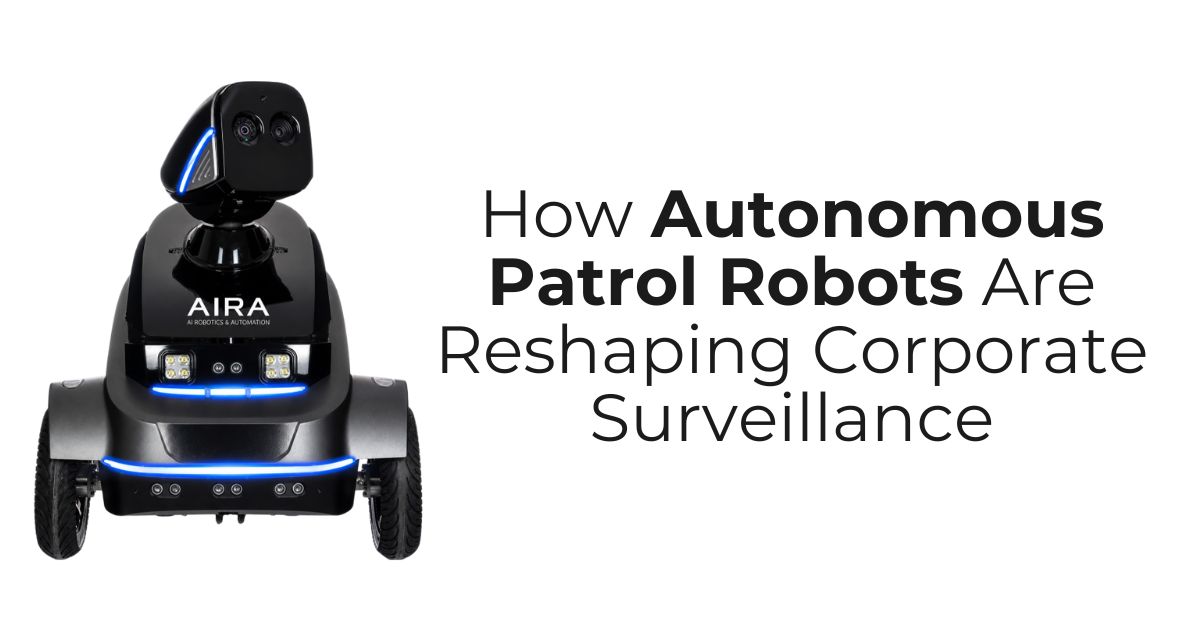
How Autonomous Patrol Robots Are Reshaping Corporate Surveillance
A large corporate facility can have CCTV at fixed points, access controls at entrances and trained security personnel on shifts. The gap appears between those points: corridors, parking areas, loading zones, perimeter routes and spaces that need to be checked repeatedly. This is where a security patrol robot can add a mobile layer to an existing security operation.
Traditional surveillance is built around visibility. Autonomous patrol adds movement to that visibility. Instead of relying only on fixed cameras, a mobile system can follow scheduled routes, collect visual information and flag defined events for the security team.
For businesses operating campuses, hospitals, manufacturing sites, warehouses or large commercial facilities, this changes the question from “How do we watch this area?” to “How do we keep checking it?”
Why Corporate Surveillance Needs More Than Fixed Cameras
CCTV remains a core part of corporate security, yet cameras have a fixed field of view. A camera can record what happens in its coverage area, while a security patrol robot can move through an assigned route and inspect spaces separated by distance.
This makes mobile patrol a useful addition to an existing security setup. The robot can be scheduled for repeated rounds, monitor defined areas and carry sensors suited to the site. The human security team can then review alerts, verify incidents and decide what action is required.
Corporate security is rarely a one-technology problem. It involves access control, CCTV, guards, alarms, incident reporting and site procedures. Robotics adds another operational layer rather than replacing the entire security stack.
The distinction matters when businesses evaluate automation. The question is not whether a robot can perform every security responsibility. It is whether a defined part of the security workflow can be handled autonomously.
What Makes an Autonomous Surveillance Robot Different?
An autonomous surveillance robot combines mobility, navigation, sensors and software in one moving platform. Instead of being positioned at a single point, it can travel through a mapped facility and follow programmed routes. It typically uses technologies such as LiDAR, cameras and onboard computing to understand its surroundings and move without continuous manual driving.
Depending on the platform, it can also collect environmental information and send alerts when a defined condition is detected.
For a corporate facility, the practical value comes from repeatability. A route can be planned around the areas that require regular checks. The system can then perform those rounds according to an operating schedule, with exceptions or alerts brought to human operators.
This creates a different model of surveillance: fixed systems watch from their positions, while mobile systems bring sensing to the route.
From Patrol Rounds to Continuous Operational Coverage
Manual patrols are shaped by shifts, people and competing responsibilities. An autonomous system follows its assigned route according to its operating design.
An AI patrol robot can support scheduled rounds across areas such as corridors, parking zones, restricted spaces and facility perimeters. It can use visual and thermal sensing to identify defined events and return to a charging point when its operating cycle requires it.
The value is not simply the number of rounds completed. It is the consistency of the patrol process and the information generated during those rounds.
For security managers, this can make routine monitoring easier to structure. Patrol routes become defined operational tasks. Alerts can be reviewed against time and location. Recurring observations can be documented rather than relying only on a guard’s memory or a later review of CCTV footage.
Where Robotic Security Guard Systems Can Fit
The phrase robotic security guard can create the wrong expectation if it suggests a machine taking over every responsibility of a trained security professional. A more useful model is task allocation.
A robotic security guard can handle repeatable movement and observation within a defined environment. Human personnel can focus on verification, communication, access decisions, incident handling and situations that require judgement.
This division can be useful in a large campus where a security team needs to cover routine patrol routes alongside front-gate duties, visitor management and emergency response. It can also apply to hospitals, warehouses, manufacturing facilities and commercial properties where specific zones require scheduled inspection.
The deployment question is straightforward: which parts of the security workflow are repetitive enough for autonomous coverage and which still require a person?
What Can a Security Patrol Robot Detect?
Detection depends on the sensors, software and configuration of the robot. A security patrol robot may be equipped for visual recognition, thermal imaging and environmental alerts.
AIRA-S100 Sentry, for example, is designed for corporate campuses, hospitals and large facilities. Its specifications include AI visual recognition, thermal imaging and autonomous patrol with automatic recharge. It can map up to 20,000 square metres and provides alerts for smoke, humans, high temperature and navigation abnormalities.
These capabilities make the system relevant to routine site monitoring rather than only security incidents. A patrol can also surface conditions that facility teams need to investigate.
The distinction is important: detection is not the same as response. A robot can identify and report a defined event; the organisation still needs procedures for assessing the alert and deciding what happens next.
How Autonomous Patrol Changes the Role of Security Teams
Introducing an autonomous surveillance robot can change how a security team spends its attention.
Instead of assigning people to every repetitive patrol round, an organisation can use robotics for defined routes while personnel concentrate on tasks that depend on communication, context and decision-making. Managers can also gain a clearer operational view of routine patrol activity.
That does not remove the need for human oversight. Autonomous systems operate within the conditions for which they were designed and configured. Site layouts change. People behave unpredictably. Equipment can fail. Alerts can require interpretation.
A practical deployment therefore needs clear escalation procedures, human monitoring and maintenance support. Real-world robotics research also identifies safety, system integration, environmental conditions and human-robot interaction as important considerations during deployment.
Where These Robots Make Practical Sense
A security patrol robot is most relevant where the security task has a repeatable route and a defined monitoring objective.
Corporate campuses can use patrols for common areas, parking zones and building perimeters. Hospitals can monitor large internal areas and scheduled routes. Warehouses and factories can add mobile checks around operational zones. Commercial facilities can use patrols across spaces that require regular observation outside peak activity.
The site itself matters. Floor conditions, access points, lift availability, pedestrian traffic, network coverage, charging locations and existing security systems all influence deployment.
This is why a robotics project should begin with the security workflow rather than the robot catalogue. Map the route first. Define the events that matter. Establish who receives alerts. Then assess the platform against those requirements.
Security Robotics Works Best as Part of the Existing Stack
The strongest deployment model is rarely built around one device working alone.
A security patrol robot can sit alongside CCTV, access control, alarms, guards and a central monitoring process. It can also add mobile sensing, while fixed cameras continue covering permanent viewpoints.
Integration deserves attention too. Security robots are connected systems, so organisations need to consider software updates, access controls, network security, data handling and system monitoring alongside physical safety.
The result is a layered security model. Cameras provide fixed visibility. Robots provide mobile patrol. Security personnel interpret events and respond. Each layer has a defined role.
What Businesses Should Evaluate Before Deployment
A security patrol robot should be assessed against the site, not simply a product demonstration.
Start with the route. Can the robot navigate the actual floor plan, thresholds and access points? Next, examine sensing: what does it detect, under which conditions, and how are alerts presented?
Then look at operational questions. How does it charge? What happens if the route is blocked? How is the system monitored? What support is available after installation? Can it work with the organisation’s existing security processes?
Data governance also matters. A robot collecting video, thermal or other sensor information introduces questions around access, retention and privacy. Those policies should be defined before deployment rather than added later.
The final assessment should be practical: does the robot solve a clearly defined patrol problem in the environment where it will operate?
Also Read: Humanoid vs Task-Specific Robots: What’s Right for Your Business in 2026?
The Direction of Corporate Surveillance
Corporate surveillance is moving beyond fixed cameras and scheduled rounds towards active, mobile monitoring.
A security patrol robot can take on defined patrol routes, monitor specified conditions and keep routine surveillance running with consistency.
For businesses considering this shift, the starting point is simple: identify the patrol tasks that can run autonomously, then build the right human response around them. AIRA brings robotics, AI and automation together to help businesses build smarter, more responsive operations.
Have a patrol route in mind? Let’s explore where we can fit into your security operation.