UV-C Disinfection Robots: How Hospitals Are Cutting Infection Rates
What Hospitals Should Know About Infection Prevention
Automated UV-C devices can reduce microbial contamination on exposed surfaces when used under appropriate conditions. Their performance depends on the device, treatment settings, room layout and how effectively the target surfaces receive the required exposure.
A UV-C sterilization robot should therefore be evaluated according to the hospital’s intended use. Relevant considerations include the microorganisms being targeted, the surfaces requiring treatment, the time available for each cycle and the conditions under which the device operates.
Hospitals should also distinguish between reducing surface contamination and reducing clinical infection rates. These are not interchangeable outcomes. Infection prevention involves several measures, including hand hygiene, correct use of personal protective equipment, routine environmental cleaning, equipment disinfection and established clinical protocols.
UV-C automation can support a broader infection-control process, but it should not be treated as a standalone solution. The hospital’s infection-control team should determine where it fits and how its use will be monitored.
UV-C, Chemical Fogging and Routine Cleaning
Not every disinfection robot uses ultraviolet light. Understanding the difference is essential when comparing technologies.
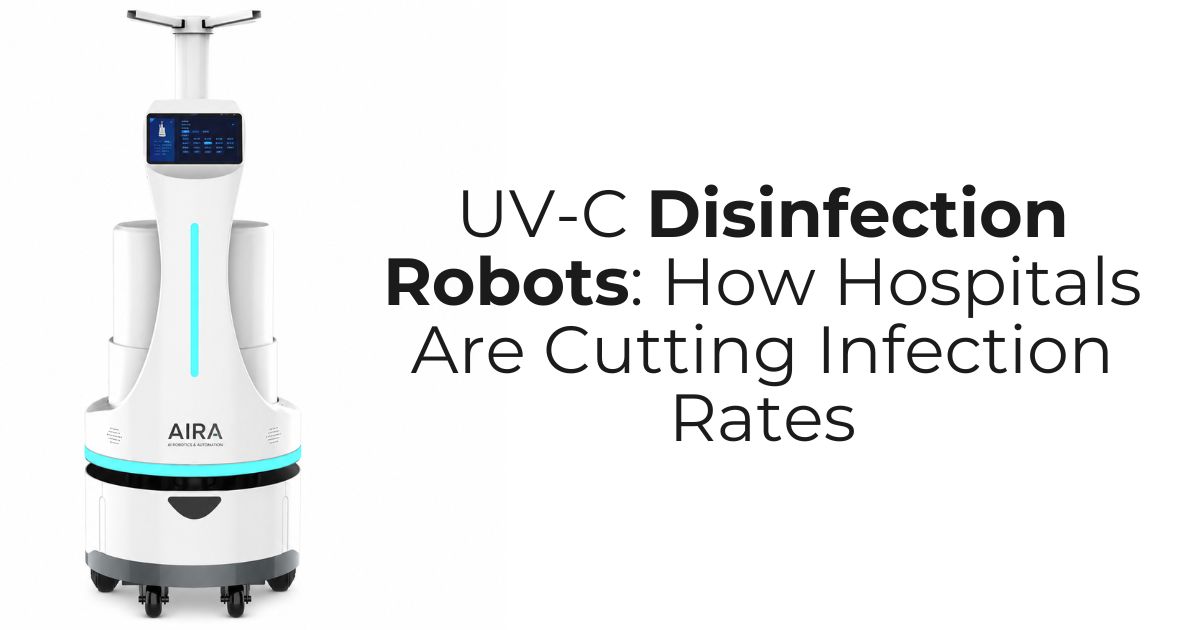
A hospital disinfection robot using UV-C treats suitable exposed surfaces through ultraviolet radiation. A chemical fogging system disperses a disinfectant formulation according to its design and operating instructions. The methods have different safety requirements, treatment conditions and limitations.
Chemical fogging should not be assumed appropriate for every hospital environment. Its suitability depends on the disinfectant, application method, exposure risks and applicable infection-control guidance. Hospitals should verify these factors before introducing a fogging system into a patient-care area.
Routine manual cleaning remains essential. Visible soil and organic matter can interfere with disinfection, while surfaces still need cleaning according to the facility’s protocols.
These technologies are not interchangeable. Selection should follow the intended application, the equipment’s capabilities and the hospital’s approved procedures.
Where Automated Disinfection May Fit
An autonomous sanitization robot can support a planned workflow when the treatment method is appropriate for the environment and the operating procedure is clearly defined.
UV-C systems may be considered for selected terminal-cleaning workflows, including treatment of designated patient rooms after discharge, subject to the device’s instructions and hospital protocols. Their suitability depends on room access, exposure conditions and the surfaces requiring treatment.
A chemical fogging robot has a different role and must be evaluated against the disinfectant’s approved use and the environment in which it will operate. Neither technology should be introduced simply because a space is large or difficult to clean.
For hospital management, the starting point should be a clearly defined use case: which area requires treatment, what contamination risks are relevant, and what outcome is expected?
Safety and Operational Requirements
Automated disinfection involves more than selecting a device and starting a cycle. The hospital needs an operating procedure covering preparation, access control, treatment, completion checks and room release.
A UV-C sterilization robot can expose people to harmful ultraviolet radiation if operated incorrectly. Treatment should follow the manufacturer’s safety instructions, including appropriate room-clearance procedures, access restrictions and safeguards against accidental exposure.
Facility teams should also understand how the system handles interruptions, incomplete cycles and obstacles. A completed movement route does not necessarily prove that every target surface received the required dose.
For chemical systems, staff must follow the disinfectant’s instructions and applicable precautions concerning exposure, ventilation, compatibility and room occupancy.
An autonomous sanitization robot should therefore be introduced with staff training, documented responsibilities and infection-control approval. Human oversight remains necessary before and after automated treatment.
How Hospitals Should Evaluate a System
Before purchasing a hospital disinfection robot, hospitals should assess the proposed technology against their infection-control objectives rather than relying on broad claims about automation.
Start by asking suppliers for evidence supporting the intended use. For UV-C devices, request information about wavelength, delivered dose, treatment time, validated operating conditions and the effects of distance and shadowing. For chemical systems, verify the formulation, permitted application, required concentration and contact conditions.
Next, evaluate the practical workflow. How long does room preparation take? How are cycles recorded? What happens when a treatment is interrupted? Who checks that the room can be released for use?
Maintenance, service availability, staff training and the total cost of operation also matter. A pilot can help determine whether the system fits the facility’s room layouts, cleaning schedules and staffing processes.
Set measurable criteria before the trial. This allows the hospital to assess performance against a defined baseline rather than relying on a product demonstration alone.
Where AIRA Fits Into the Disinfection Conversation
AIRA offers a disinfection solution for facilities looking to organise scheduled, contactless treatment across large indoor spaces.
AIRA-C200 Sentry Mist is an autonomous fogging disinfection robot designed for hospitals, airports, transit hubs, offices and other large facilities. Its published specifications include a 13-litre tank, adjustable fogging output of 1,200–3,000 mL per hour, Laser SLAM and V-SLAM navigation, remote cloud control and automatic return charging. AIRA lists a coverage figure of 1,000 m³ disinfected in 15 minutes and mapping capability of up to 40,000 m².
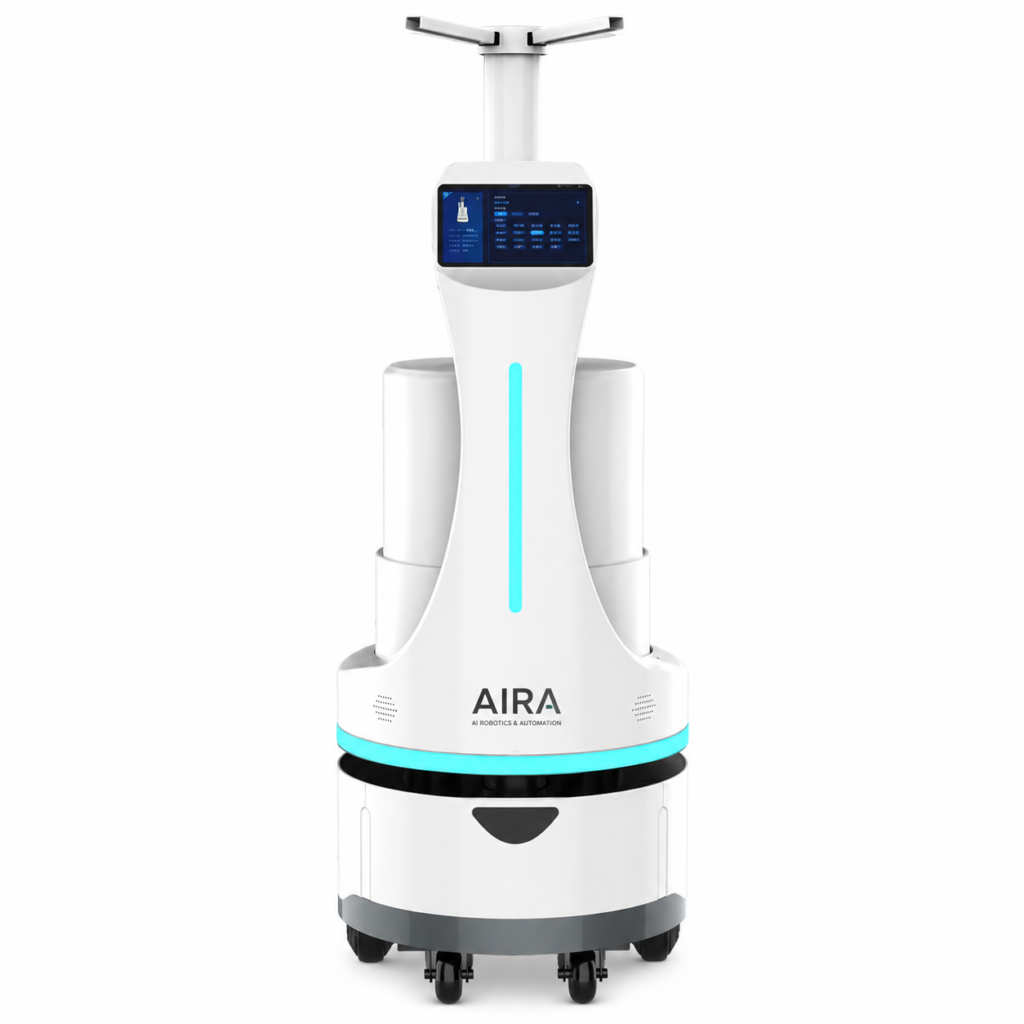
These specifications describe a chemical fogging system, not a UV-C device. Hospitals considering AIRA-C200 Sentry Mist should confirm that the intended disinfectant and application method are appropriate for their specific environment and infection-control protocols.
The wider principle remains the same: choose technology for a defined operational need, verify its suitability and integrate it into a process overseen by the hospital’s infection-control team.
Explore autonomous disinfection with AIRA.
Every healthcare facility has different cleaning requirements, operating conditions and infection-control protocols. AIRA works with businesses and institutions exploring autonomous robotics for defined operational needs.
Speak to AIRA about your facility’s requirements and assess whether its disinfection solutions fit your operating environment.